Flood relief clinic hosted by WVU Eye Institute provides nearly 200 West Virginians with free eye care services and relief supplies
On July 22, floodwaters in Upshur and Lewis Counties surpassed levels not seen in more than 20 years, resulting in devastation across the region. More than 22,000 residents lost power and several lost much more, including their homes and nearly everything they own.
In the weeks that followed, the surrounding communities banded together to begin the process of rebuilding. Among those to answer the call was the West Virginia University Eye Institute and Department of Ophthalmology Sciences, not with construction crews, but with what they know best – an eye clinic.
On August 29, a team of 41 volunteers consisting of physicians, ophthalmic techs, scribes, medical students, opticians, administrators, nurses, vision specialists and orientation and mobility specialists traveled to WVU Medicine St. Joseph’s Hospital in Buckhannon to host a free flood relief clinic for residents.
Services provided through the clinic included comprehensive eye exams, eyeglasses repair and fittings, general health screenings and referrals for additional care. A flood supply relief drive was also held, where donated items such as shelf-stable food, toiletries and cleaning supplies were distributed to residents in need.
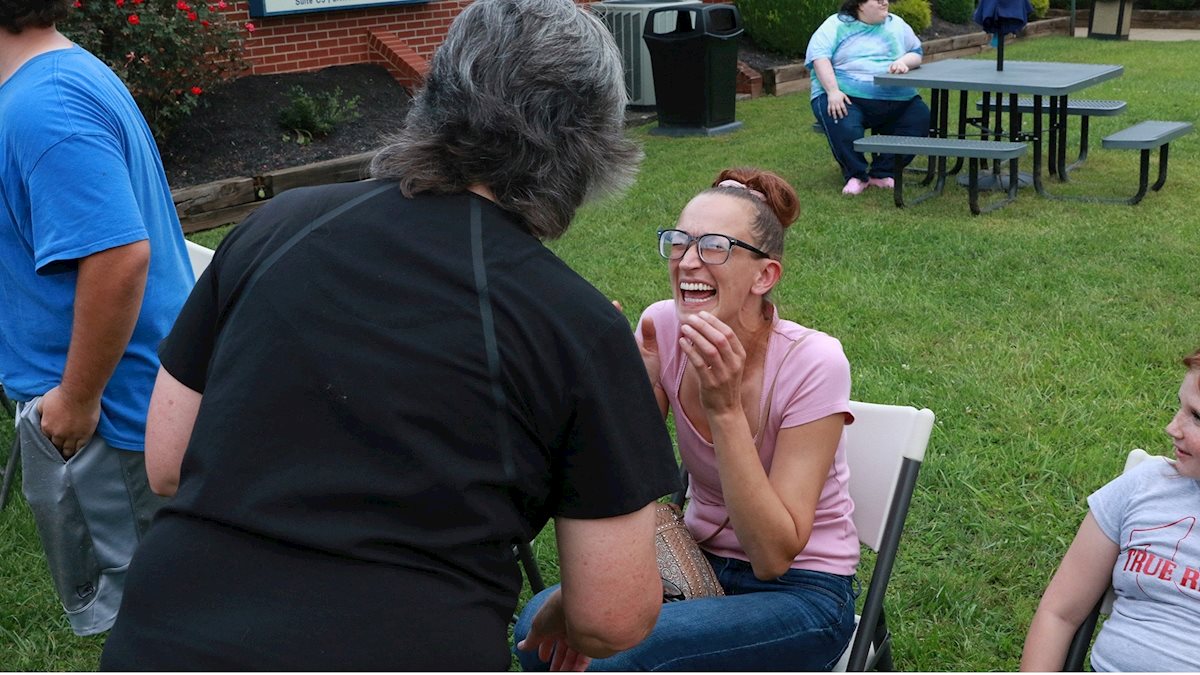
For local resident Breann Dulyea, the clinic came at precisely the right moment. She hadn’t had an eye exam in more than three years and her son’s glasses were broken. The flooding had upended the school year, and she had been unable to find a provider that accepted her insurance. She came to the clinic hoping for a lifeline, and left with new eyeglasses prescriptions for herself, her son, her nieces and both of her parents.
“It is comforting to know that WVU Medicine and the Eye Institute are willing to help our community, especially during this time of great need,” Dulyea said. “It provides great peace of mind heading into the new school year knowing that my son will be able to see properly in class with his new glasses. Thanks to this clinic, my entire family can see properly again.”
In a single day, the team of volunteers examined 191 patients, issued 155 new glasses prescriptions and identified 55 patients who required follow-up care for ocular conditions including cataracts, glaucoma, diabetic retinopathy, oculoplastic conditions and pediatric eye care.
Eye Institute Director of Outreach Rebecca Coakley, MA, CLVT, was one of the primary organizers for the event and said the clinic is simply an extension of WVU’s land-grant mission and the Eye Institute’s mission to improve vision, prevent blindness and expand access to high-quality eye care across the region.
“This community faced unimaginable devastation, with many people losing nearly all of their worldly possessions, including their glasses and, with that, their ability to see clearly,” Coakley said. “In the midst of so much loss and uncertainty, we felt the obligation to be there in support of our community.”
Among the 41 volunteers was Daniel Harrast, a fourth-year medical student who learned about the opportunity during an elective ophthalmology rotation. He reached out to his classmates in the Ophthalmology Interest Group and found seven more students who were able to participate.
Their primary role was to serve as liaisons between patients and healthcare workers, taking them from station to station and managing their paperwork throughout their visit. But what Harrast said he gained from these one-on-one interactions with patients was something he couldn’t learn in any classroom.
“While walking with the patients, I had some time to talk with them and hear how they were personally affected by the flooding,” he said. “Many lost their entire homes along with nearly all of their possessions, including their glasses. Some people’s homes weren’t seriously affected, but the flooding of local grocery stores severely limited their access to food and supplies.”
He paused on that reflection – how a disaster might not hit everyone the same way, but still makes an impact on everyone in some way.
“This clinic helped me recognize the scope of how a disaster like this can affect an entire community, and how we can respond to make a positive impact on that community through outreach,” Harrast said.
Glasses ordered through the clinic were distributed to patients at St. Joseph’s Hospital on Sept. 17, where a team of opticians and specialists provided fittings and ensured patients received the correct prescription. For those who could not afford their glasses, the cost was covered by the Lions Club of West Virginia or through private donations.
Coakley extended her gratitude to the Lions Club of West Virginia, St. Joseph’s Hospital, the Eye Shop and all of the on-site volunteers and private donors for making the flood relief clinic possible.
“Thanks to the hard work and support from our volunteers and community partners, we were able to give people back something they desperately needed without them worrying about cost, insurance or what they had lost,” she said. “For a few hours, we could simply help them see again, and perhaps provide a small moment of comfort, humanity and hope during an incredibly difficult time.”
To learn more about outreach at the WVU Eye Institute and Department of Ophthalmology and Visual Sciences, visit medicine.hsc.wvu.edu/eye/outreach.