Research
Investigations into the functional organization of nervous system is more fun and informative when computational neuroscience is combined with experiments!
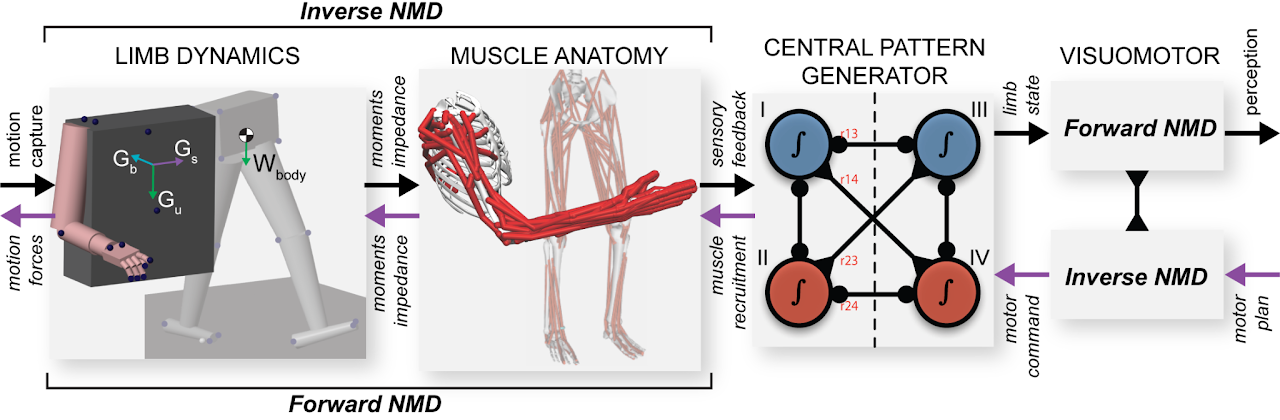
Neuromechanics of Movement
A key inquiry in neuroscience involves understanding the interplay between neural motor control, limb structure, and external forces to facilitate efficient movement. We conduct experimental and computational research focusing on these neuromechanical interactions in humans. Our findings suggest that musculoskeletal anatomy has evolved to streamline motor control, essentially narrowing the range of potential control strategies. Additionally, we've discovered that spinal cord anatomy is a reflection of musculoskeletal structure, and that corticospinal control mechanisms depend on this anatomy to counteract gravitational forces during arm reaching tasks. These insights demonstrate how the limb's physical characteristics and its environmental interactions are integrated within the nervous system. The implications of our research extend to practical applications, such as the development of a real-time biomimetic myoelectric hand prosthesis controller, and have spurred further research in various laboratories.
- Gritsenko, V., Hardesty, R. L., Boots, M. T., and Yakovenko, S. (2016) Biomechanical constraints underlying motor primitives derived from the musculoskeletal anatomy of the human arm. PLoS ONE, 11(10), e0164050. PMCID: PMC5063279
- Sobinov A, Yakovenko S, Gritsenko V, Boots MT, Gaunt RA, Collinger JL, Fisher L. Systems and methods for approximating musculoskeletal dynamics. Patent WO2021127601A1. Application Number US16/722,815; filing date September 18, 2017. International Application No. PCT/US2018/051575 filing date September 18, 2018. Amendment Filing Date December 20, 2019.
- Hardesty, R. L., Ellaway, P. H., and Gritsenko, V. (2023) The Human Motor Cortex Contributes to Gravity Compensation to Maintain Posture and During Reaching. Journal of Neurophysiology. 129 (1) pp. 83-101. PMID 36448705
- Taitano, R. I., Yakovenko, S., and Gritsenko, V. (2024) Neuromechanical Coupling is Reflected in the Spatial Organization of the Spinal Motoneuron Pools. Communications Biology 7(97). PMCID: PMC10789783
- Korol, A. S. and Gritsenko, V. (2024) How muscle synergies fail to solve the muscle redundancy problem during human reaching. bioRxiv preprint DOI: 10.1101/2024.02.12.579990. Under review in Communications Biology.
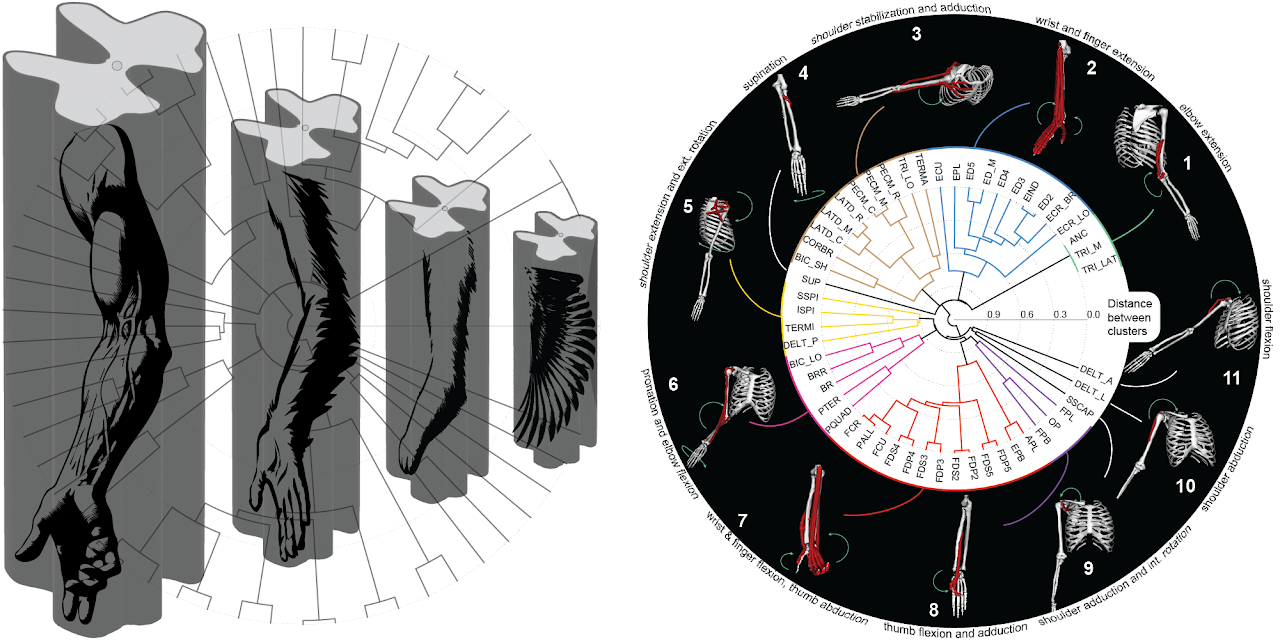
Sensorimotor Integration
Another fundamental problem in neuroscience is sensorimotor integration for efficient motor control. Our findings indicate that proprioceptive feedback is integrated with anticipatory signals to accurately perceive the position and motion of the limbs. Furthermore, this precise sensing is crucial for quick adjustments in response to unexpected changes during motion, both from external sources and from within the body. We discovered that these immediate adjustments, or "online corrections," depend on dynamic feedback that is proportional to the error detected, and this mechanism shows limited adaptability when faced with altered visual and motor conditions. Additionally, our recent work suggests that the modulation of muscle spindle feedback by fusimotor activity does not account for the variable muscle co-activation observed in different tasks. This body of work sheds light on the intricate and non-linear interplay between anticipatory and reactive neural mechanisms in controlling arm dynamics.
- Gritsenko, V., Krouchev,N., and Kalaska, J. F. (2007) Afferent input, efference copy, signal noise and biases in perception of joint angle during active versus passive elbow movements. Journal of Neurophysiology, 98, pp. 1140-54. PMID: 17615137
- Gritsenko, V., Yakovenko, S., and Kalaska, J. F. (2009) Integration of predictive feedforward and sensory feedback signals for online control of visually-guided movement. Journal of Neurophysiology. 102, pp. 914-930. PMID: 19474166
- Gritsenko, V. and Kalaska, J. F. (2010) Rapid online correction is selectively suppressed during movement with a visuomotor transformation. Journal of Neurophysiology, 104, pp. 3084-3104. PMID: 20844106
- Hardesty, R. L., Boots, M. T.,Yakovenko, S., and Gritsenko, V. (2020) Computational evidence for nonlinear feedforward modulation of fusimotor drive to antagonistic co-contracting muscles. Scientific Reports. 10: 10625. PMCID: PMC7326973
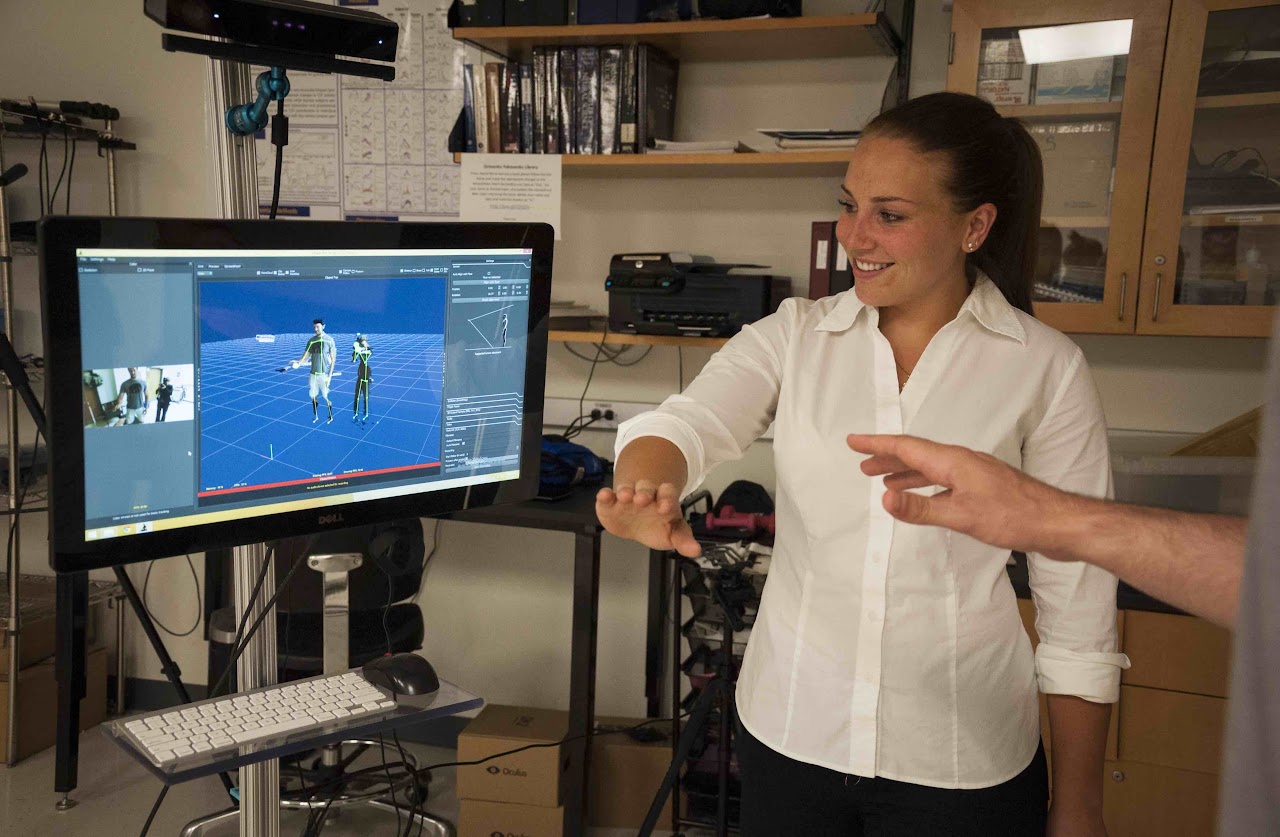
Quantitative Assessment of Skill and Motor Deficits
The translation of scientific knowledge of mechanisms into improved medical care is of great importance. We work to integrate computational tools into medical applications through the creation of innovative evaluation techniques. We have demonstrated that the fusion of neuromuscular electrical stimulation with a sensor-equipped exercise workstation yields critical data for assessing rehabilitation outcomes. We have also successfully demonstrated the effectiveness of motion capture technology in measuring motor deficits following strokes and surgeries. Additionally, my team has uncovered novel details on motor impairments in intralimb coordination after strokes by analyzing force-related metrics.
More information on technology and references.
- Gritsenko, V. and Prochazka, A. (2004) A functional electric stimulation--assisted exercise therapy system for hemiplegic hand function. Archives of Physical Medicine and Rehabilitation, 85(6), pp. 881 - 5. PMID: 15179640
- Olesh, E. V., Yakovenko, S., and Gritsenko, V. (2014) Automated Assessment of Upper Extremity Movement Impairment due to Stroke. PLoS ONE, 9(8), e104487. PMCID: PMC4123984
- Gritsenko, V., Dailey, E., Kyle, N., Taylor, M., Whittacre, S., and Swisher, A. K. (2015) Feasibility of Using Low-Cost Motion Capture for Automated Screening of Shoulder Motion Limitation after Breast Cancer Surgery. PLoS ONE, 10(6): e0128809. PMCID: PMC4468119
- Gritsenko, V., Moon, T., Boone, B., and Yakovenko, S. (2021) Quantifying Performance in Robotic Surgery Training Using Muscle-Based Activity Metrics 2021 IEEE Conference on System Engineering & Technology (ICSET2021), pp. 358-362. doi: 10.1109/ICSET53708.2021.9612568 PMID: 37228383
- Thomas, A., Olesh, E. V., Adcock, A., and Gritsenko, V. (2021) Muscle torques and accelerations provide more sensitive measures of post-stroke movement deficits than joint angles. The Journal of Neurophysiology. 126 (2), pp. 591-606. PMID: 34191634.
- Yough, M., Hanna, K., Yakovenko, S. and Gritsenko, V. (2022) Surface Electromyography Provides Neuromuscular Insights for Skill Acquisition in Microgravity. 73rd International Astronautical Congress (IAC), Paris, France, 18-22 September 2022. IAC-22-A2-IP 68484 PMID: 37234941
- Korol, A. S. and Gritsenko, V (2025) Control signal dimensionality depends on limb dynamics. PLoS One 20(4): e0322092. DOI
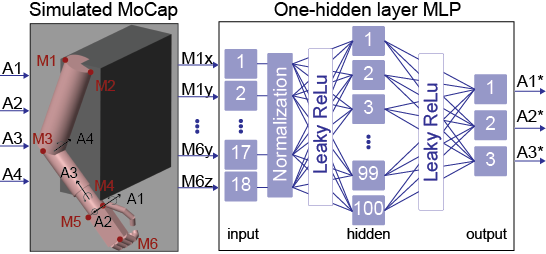
Computational Tools for Science and Medicine
Computational tools play a pivotal role in enhancing our grasp of sensorimotor control systems. My team and I have pioneered methods to decipher noisy surface electromyographic signals, uncovering the underlying neural strategies that orchestrate these signals. Additionally, we've innovated biomimetic approaches to tackle forward and inverse dynamic simulation problems that plague complex multidimensional models of human limbs. These advancements under my guidance have significantly simplified extraction of reliable biomechanical signals and their interpretation for use in basic science and medical applications.
- Olesh, E. V., Pollard, B. S., and Gritsenko, V. (2017) Gravitational and dynamic components of muscle torque underlie tonic and phasic muscle activity during goal-directed reaching. Frontiers in Human Neuroscience, 11 (474), pp. 1-12. PMCID: PMC5623018
- Popov, A., Olesh, E. V., Yakovenko, S., and Gritsenko, V. (2018) A novel method of identifying motor primitives using wavelet decomposition. IEEE Xplore: 2018 IEEE 15th International Conference on Wearable and Implantable Body Sensor Networks (BSN). DOI: 10.1109/BSN.2018.8329674. PMCID: PMC5942196
- Yough, M. G., Hardesty, R. L., Yakovenko, S. and Gritsenko, V. (2021) A segmented forearm model of hand pronation-supination approximates joint moments for real time applications. 2021 10th International IEEE/EMBS Conference on Neural Engineering (NER), pp. 751-754, doi: 10.1109/NER49283.2021.9441405. PMCID: PMC8243400.
- Korol, A. S., Rodzin, T., Zabava, K., and Gritsenko, V. (2023) Neural Networks-Based Approach to Solve Inverse Kinematics Problems for Medical Applications. TechRxiv preprint DOI: 10.36227/techrxiv.24088629.v1 Accepted for IEEE EMBS 2024 at Orlando, FL in July 2024.
- Bahdasariants, S., Yough, M. T., and Gritsenko, V. (2024) Impedance-based biomechanical method for robust inverse kinematics from noisy data. IEEE Sensors Letters. DOI: 10.1109/LSENS.2024.3388713
Discover more details about applications of our technologies outside the lab.
Enhancing Clinical Movement Diagnostics
 To enhance the assessment of movement impairments, we are innovating by automating traditional clinical tests and creating advanced quantitative tests. These new methods aim to objectively measure the nuances of movement impairments with high precision. This detailed analysis will not only save valuable time but also provide a solid foundation for tailoring personalized intervention strategies, thereby improving patient outcomes and engagement in their own care process.
Automated and Advanced Assessment Techniques
Our objective is to develop an automated, objective method for assessing the movement impairments of individuals with neurological conditions. Not limited to sophisticated motion capture systems, our approach also utilizes accessible devices such as cameras and wearables to record movement. Our research has demonstrated the viability of leveraging clinical insights into critical movements to observe, and creating algorithms capable of quantifying deviations from typical neurological motion patterns.
More media reports about this project.
- Gritsenko, V. and Prochazka, A. (2004) A functional electric stimulation--assisted exercise therapy system for hemiplegic hand function. Archives of Physical Medicine and Rehabilitation, 85(6), pp. 881 - 5. PMID: 15179640
- Olesh, E. V., Yakovenko, S., and Gritsenko, V. (2014) Automated Assessment of Upper Extremity Movement Impairment due to Stroke. PLoS ONE, 9(8), e104487. PMCID: PMC4123984
- Gritsenko, V., Dailey, E., Kyle, N., Taylor, M., Whittacre, S., and Swisher, A. K. (2015) Feasibility of Using Low-Cost Motion Capture for Automated Screening of Shoulder Motion Limitation after Breast Cancer Surgery. PLoS ONE, 10(6): e0128809. PMCID: PMC4468119
- Inamdar, K., Doroshenko, O., and Gritsenko, V. (2023) Beyond Traditional Methods: An AI-powered paradigm for assessing postural control during prone play in infants. APTA Combined Sections Meeting. Boston, MA. Poster 3307.
Novel digital biomarkers
Our objective is to acquire new insights into the disease-induced alterations in neural mechanisms underlying movement impairment. This research seeks to unravel the complex changes in brain function that result from pathological conditions, thereby advancing our understanding of motor deficits. The ultimate goal is to inform the development of more effective treatments and interventions for those affected by such impairments.
- Thomas, A., Olesh, E. V., Adcock, A., and Gritsenko, V. (2021) Muscle torques and accelerations provide more sensitive measures of post-stroke movement deficits than joint angles. The Journal of Neurophysiology. 126 (2), pp. 591-606. PMID: 34191634.
- Gritsenko, V., Thomas, A. B., Olesh, E. V., and Adcock, A. (2022) Muscle moments can be used to quantify hemiparetic deficits in intralimb coordination with high sensitivity. APTA Combined Sections Meeting. San Antonio, TX. Poster 2171.
- Korol, A. S., Adcock, A., and Gritsenko, V. (2023) Quantifying changes in muscle activity related to postural and propulsive forces produced during reaching by people with chronic hemiparesis. Washington, DC: Society for Neuroscience. Online.
- Taitano, R. I., Abbas,S., and Gritsenko, V. (2023) Analysis of muscle activity patterns in degenerative cervical myelopathy and insights into the role of the spinal cord in neuromechanical tuning: a case study. Washington, DC: Society for Neuroscience. Online.