Curriculum
Comprehensive Training at WVU Anesthesiology
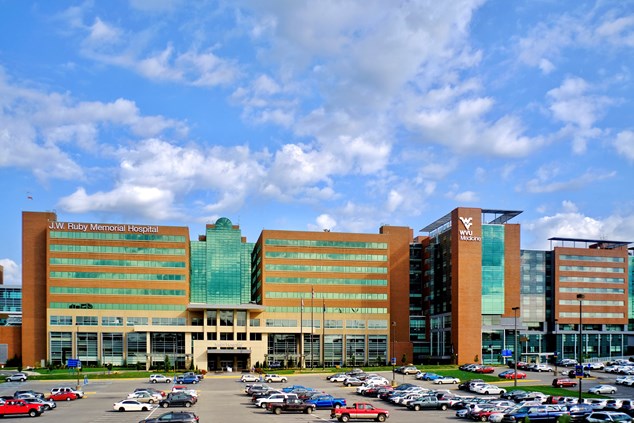
One Full Academic Day. Every Week.
Resident education is protected and built into the structure of our program.
Each Wednesday, residents who are not providing essential clinical coverage participate in a dedicated academic day. This allows education to occur during protected time rather than being routinely added before or after a full clinical day.
The Wednesday curriculum includes faculty-led didactics, simulation, board preparation, mock oral examinations and OSCEs, Grand Rounds, journal club, morbidity and mortality conference, research education, and other interactive learning experiences.
A Structured Curriculum from Intern Year Through Graduation
Education begins during the categorical intern year and progresses throughout all four years of residency. Our curriculum combines structured didactics, simulation, case-based learning, independent study, and clinical application to develop the knowledge and judgment required for independent practice.
Didactic education is organized around the American Board of Anesthesiology content outline, providing systematic coverage of the foundational sciences, clinical anesthesiology, perioperative medicine, and anesthesiology subspecialties.
Educational content progresses with resident experience. Junior residents focus on building a strong foundation in anesthesiology, while senior residents increasingly address advanced clinical decision-making, complex perioperative care, and preparation for independent practice.
Early Introduction to Anesthesiology
Our categorical residents begin learning anesthesiology during the intern year rather than waiting until the start of CA-1 training.
Interns complete two months of anesthesiology, providing early exposure to operating room workflow, preoperative evaluation, anesthetic planning, airway management, intraoperative care, and the fundamentals of perioperative medicine.
A dedicated period of operating room assimilation before the CA-1 year further prepares residents for the transition to full-time clinical anesthesia training.
Wednesday Academic Curriculum
The dedicated Wednesday academic day serves as the foundation of our formal educational program.
Didactics
Faculty-led teaching follows the ABA content outline and is tailored to the level of training. Sessions include foundational anesthesiology, subspecialty topics, physiology and pharmacology, perioperative medicine, clinical decision-making, and board-relevant material.
Residents participate in both class-specific sessions and educational activities that bring multiple residency classes together.
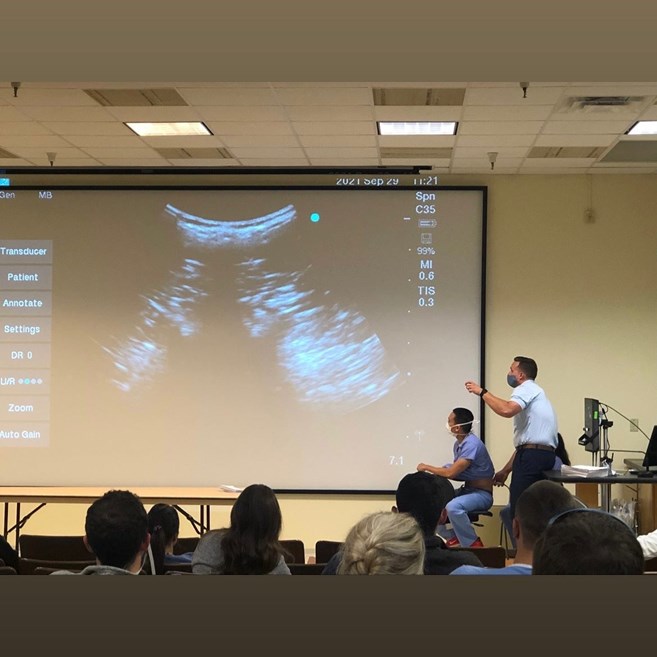
Grand Rounds
Departmental Grand Rounds include presentations from WVU faculty, visiting speakers, residents, and experts from across anesthesiology and medicine. Topics span clinical practice, emerging evidence, patient safety, professional development, and advances within the specialty.
Simulation
Simulation-based education is incorporated throughout residency. Residents practice the management of uncommon, high-risk, and time-sensitive clinical scenarios in an environment that allows deliberate practice, feedback, and team-based learning.
Simulation is also used for procedural education, crisis management, and preparation for the applied components of anesthesiology board certification.
Mock Oral Examinations and OSCEs
Residents participate in structured mock oral examinations and Objective Structured Clinical Examination experiences throughout training.
Mock oral examinations are designed to closely reproduce the format and expectations of the ABA APPLIED Examination, including a two-examiner format and cases that require residents to explain and defend their clinical decisions.
Board Preparation
Preparation for board certification occurs throughout residency rather than only immediately before an examination.
The curriculum includes ABA content-based didactics, focused review sessions, practice questions, simulation, mock oral examinations, and OSCE preparation. Additional review is provided in preparation for the Anesthesiology In-Training Examination and ABA BASIC Examination.
Several members of our faculty serve as national ABA board examiners and contribute their experience to resident education and examination preparation.
Point-of-Care Ultrasound
Point-of-care ultrasound education is integrated throughout residency through formal instruction, hands-on practice, and clinical application.
Residents develop skills in focused cardiac, pulmonary, gastric, and other perioperative ultrasound applications. Dedicated POCUS experiences provide residents with a structured pathway toward completion of the requirements for ASA Diagnostic POCUS certification prior to graduation.
Hands-On and Procedural Education
Formal didactics are complemented by focused workshops and experiential learning.
Educational experiences include:
- Awake intubation
- Emergency front-of-neck airway training
- Cardiopulmonary bypass education
- Perfused cadaver laboratory experiences
- Blood bank and transfusion medicine education
- Point-of-care ultrasound
- Airway and procedural simulation
These experiences allow residents to develop technical skills and familiarity with important clinical situations outside the pressures of routine patient care.
Journal Club, Quality Improvement, and Scholarship
Monthly journal clubs provide structured review and discussion of important anesthesiology literature, with an emphasis on understanding evidence and applying it to clinical practice.
Residents also participate in morbidity and mortality conferences focused on clinical decision-making, patient safety, and systems improvement.
Research and scholarly education provide opportunities to develop projects in clinical research, quality improvement, medical education, and other areas of academic interest. Residents work with faculty mentors and regularly present scholarly work at regional and national meetings.