Why WVU
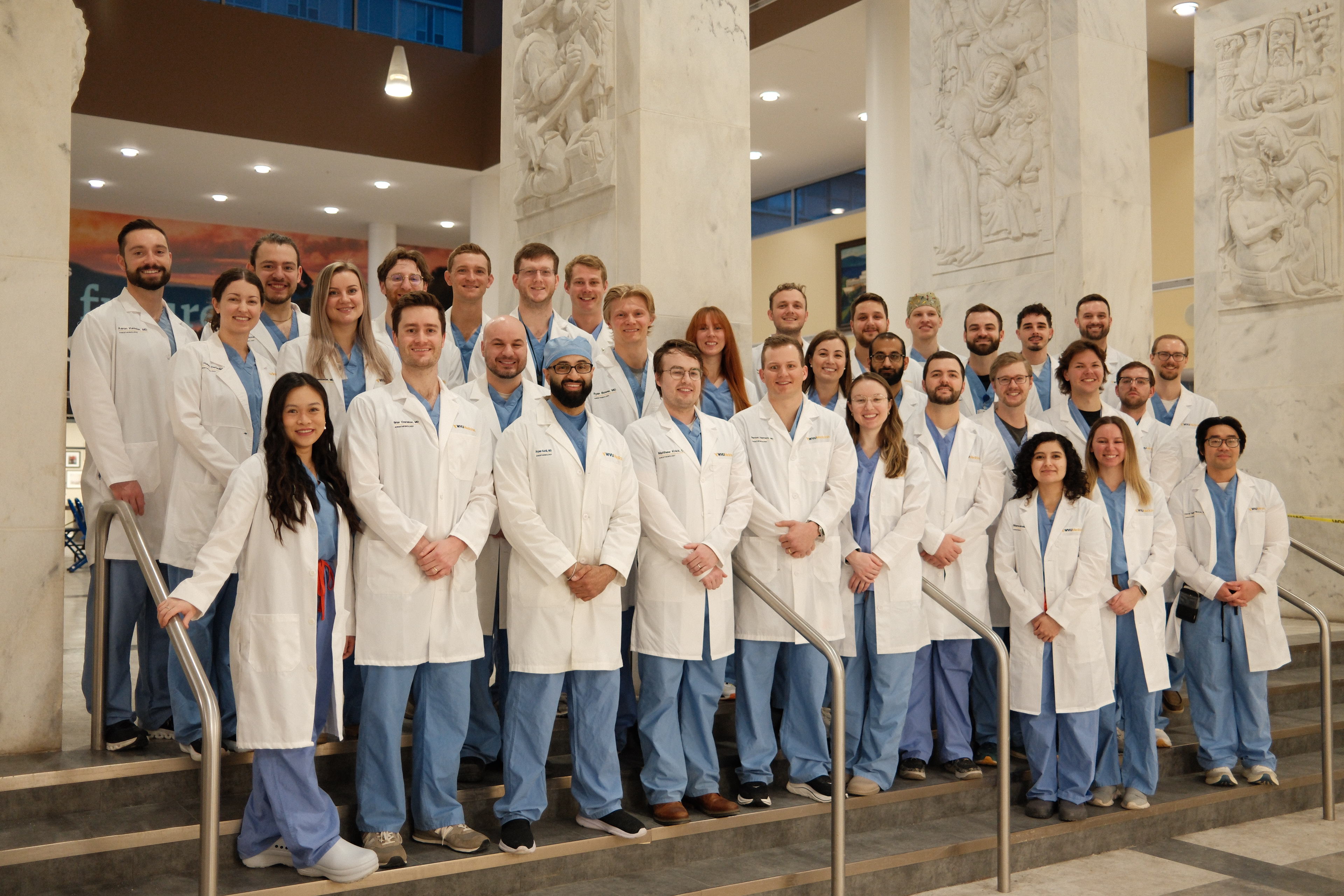

Anesthesiology Residency Program
Welcome to the Anesthesiology Residency Program at West Virginia University.
Our four-year categorical program offers 11 positions each year and provides broad clinical training at WVU Medicine’s flagship academic medical center in Morgantown. Residents care for patients across the full spectrum of anesthesiology, from routine ambulatory procedures to complex trauma, cardiovascular, pediatric, obstetric, neurologic, oncologic, and critical care.
Why WVU Anesthesiology?
Comprehensive Training on One Medical Campus
One of the distinguishing features of residency at WVU is the concentration of our major clinical training in one location. J.W. Ruby Memorial Hospital, the WVU Heart and Vascular Institute, WVU Medicine Golisano Children’s Hospital, and the WVU Cancer Institute are all located on the same Morgantown medical campus.
This gives residents broad exposure to adult, cardiovascular, pediatric, trauma, oncologic, and subspecialty care without routinely traveling between hospitals across a city or region. The campus continues to grow, including a new outpatient surgical facility scheduled for completion in 2027, further expanding the clinical resources available to our residents.
High-Acuity Clinical Experience
Ruby Memorial Hospital is a major tertiary and quaternary referral center serving patients from across West Virginia and the surrounding region. Residents train in an environment that includes northern West Virginia’s only Level I adult trauma center and West Virginia’s only Level IV neonatal intensive care unit.
Throughout residency, trainees gain experience caring for medically complex patients and performing anesthetics across every major anesthesiology subspecialty.
Education That Is Protected and Intentional
Resident education is built into the structure of the program. Our curriculum includes a dedicated academic day each week when residents are not assigned to clinical responsibilities, along with simulation, board preparation, mock oral examinations and OSCEs, point-of-care ultrasound, journal clubs, case-based conferences, and subspecialty teaching.
Residents also receive structured exposure to anesthesiology during the intern year, providing an early foundation for the transition to CA-1 training.
A Strong Record of Resident Performance
Our residents consistently perform at a high level on national examinations. Recent classes have achieved excellent results on the ABA BASIC and ADVANCED examinations as well as the Anesthesiology In-Training Examination.
These outcomes reflect a combination of resident effort, structured preparation, faculty mentorship, and a program that places a high priority on education.
Progressive Responsibility and Individualized Training
Residents assume increasing clinical responsibility throughout training while working closely with faculty across every major anesthesiology subspecialty.
As residents progress through the program, they develop greater independence and decision-making responsibility. The CA-3 year offers substantial flexibility for advanced clinical experiences and electives, allowing residents to tailor their training toward fellowship, academic medicine, private practice, or other career goals.
Opportunities Beyond the Operating Room
Residents are encouraged to participate in clinical research, quality improvement, medical education, and other scholarly work throughout the department and university.
Faculty mentorship is available across a wide range of interests, and residents regularly present their work at regional and national meetings. Graduates of the program pursue competitive fellowship training as well as careers in academic and private practice throughout the country.
A Close-Knit Program Within a Major Academic Medical Center
WVU offers the clinical breadth and complexity of a large academic referral center within a residency where residents and faculty know one another well.
We value excellent clinical training, teaching, professionalism, teamwork, and a culture in which residents have an active voice in the program. Our goal is to graduate anesthesiologists who are prepared to practice confidently across a wide range of clinical environments.
Life in Morgantown
Morgantown combines the resources and energy of a major university community with an affordable and manageable place to live.
Residents have convenient access to outdoor recreation, college athletics, restaurants, and community events, while larger metropolitan areas such as Pittsburgh and Washington, D.C., are within driving distance. For residents and their families, Morgantown offers an attractive balance between a demanding academic training environment and quality of life outside the hospital.
We invite you to learn more about our residents, curriculum, clinical training, and application process, and to discover what makes WVU an outstanding place to train in anesthesiology.