Simulation

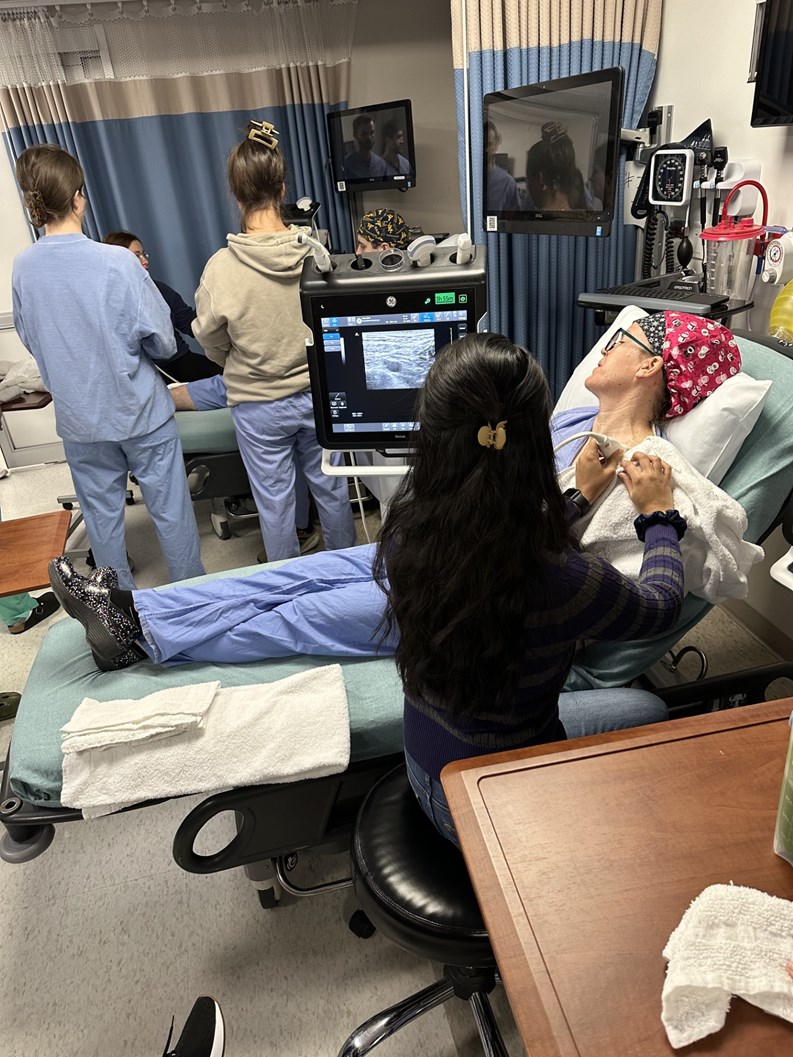
Human simulation is an innovative way to teach clinical anesthesiology. The West Virginia University Department of Anesthesiology demonstrated its commitment to innovation by becoming one of the first programs in the U.S. to purchase a METI Human Patient Simulator. The simulator uses a life-like mannequin that can breathe, produce pulses and heart sounds, and simulate different levels of airway obstruction. It can also generate EKGs, blood pressure waveforms, carbon dioxide readings and thumb movements to measure neuromuscular blockade. Instructors can program different patient conditions, including coronary artery disease, pregnancy and advanced age, to create realistic clinical scenarios.
The instructor then chooses interesting scenarios such as acute hemorrhage, aortic cross clamping, or anaphylaxis. It is up to the care team to use their skills of physical diagnosis, interpretation of data from monitors and experience to make the proper management decisions. Automatic drug recognition allows the simulator to react in real time to pharmacologic treatment.
In anticipation of the ACGME’s “Milestones Project” we have a series of simulation based, level-specific Objective Structured Clinical Examinations (OSCEs) to assess the progression of our residents’ skill level. Our Simulation Program has merged with the School of Medicine to create the WV STEPS (Simulation Training and Education for Patient Safety) Program. This center provides a greatly enlarged facility to provide comprehensive simulation experiences.
Led by the anesthesiology faculty, residents will have the chance multiple times a year to engage in simulation sessions to discuss and practice case scenarios that are challenging and require thinking outside the box. Residents will get the chance to try new airway techniques and receive feedback on their performance. In addition, residents will work with other residency programs at WVU for specific scenarios in a team-oriented manner.